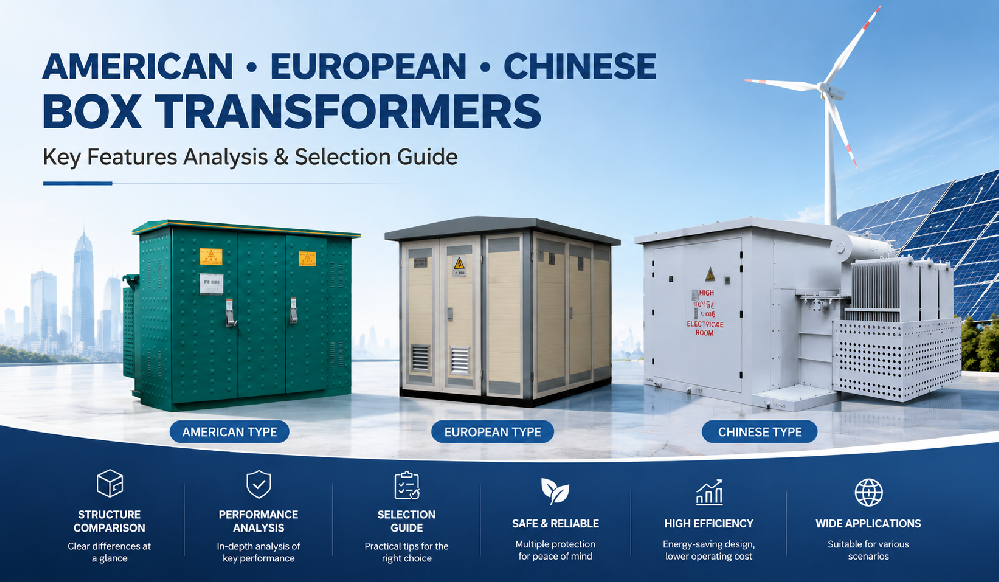
American-Style, European-Style & Sino-Style Compact Substations
A Comparative Analysis and Selection Guide for Three Design Types
A compact transformer substation (commonly referred to as a “pad-mount substation” or “box substation”) is a fully integrated power distribution assembly that combines a transformer, high-voltage switching and protection devices, low-voltage distribution equipment, and metering units in a single enclosure — essentially a miniature substation capable of supplying end users directly. Based on structural design and technical origin, compact substations can be classified into three main types: American-style, European-style, and Sino-style. Each has its own distinctive characteristics and is suited to different engineering applications. This article examines all three in turn.
01 American-Style Compact Substation
Compact and Practical — The “Lightweight” Choice
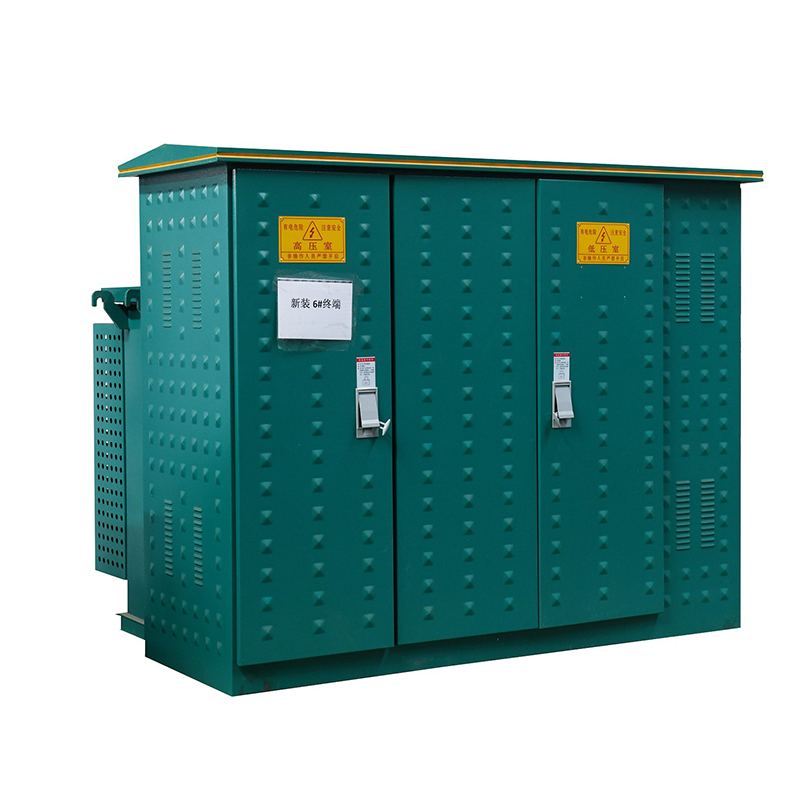
▲ American-style compact substation — typical appearance
The American-style compact substation originated in the United States and entered the Chinese market in the 1990s following China’s economic opening, quickly gaining widespread adoption. Its defining feature is the integration of a load switch, ring main unit, and fuse assembly — in simplified form — directly into the transformer oil tank, along with an oil-immersed zinc oxide surge arrester, resulting in an extremely compact overall structure. The transformer itself eliminates the conservator tank, with the oil tank and radiators exposed directly to the air, dramatically reducing the installed footprint.
In terms of protection, the high-voltage side is equipped with fuses to provide short-circuit and overload protection, while the low-voltage side uses moulded-case circuit breakers for multi-level protection. Non-electrical protection is provided by a pressure relief valve, oil thermometer, and thermal controller.
Typical Applications:
▸ Urban road and street lighting; temporary construction-site power supply
▸ Step-up distribution for renewable energy (solar PV and wind farms)
▸ Sites requiring rapid deployment or with limited available footprint
02 European-Style Compact Substation
Solid and Sophisticated — The “Traditional” Choice
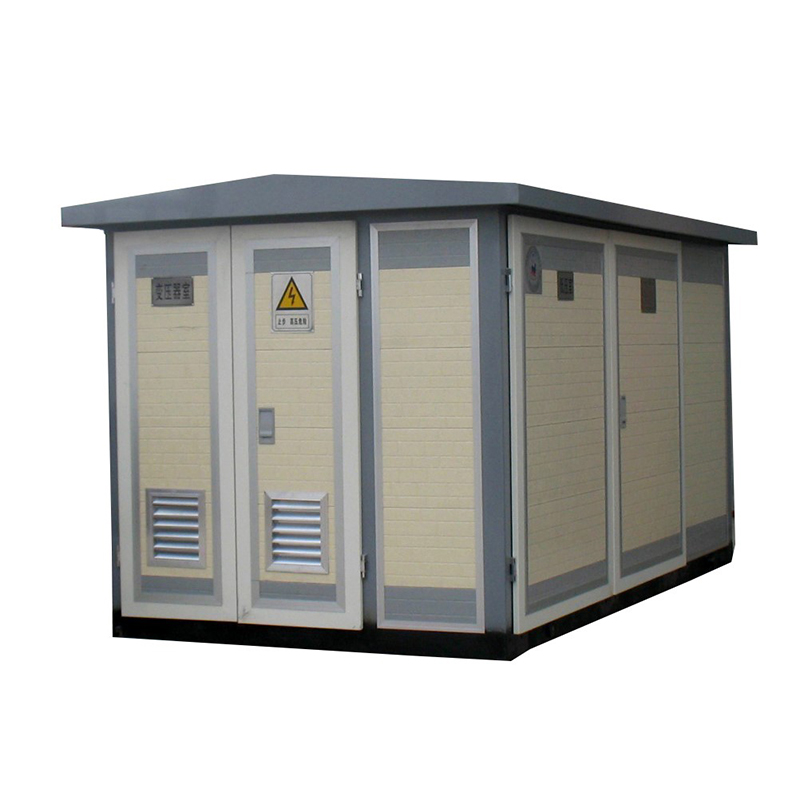
▲ European-style compact substation — typical appearance
The European-style compact substation was introduced into China from France, Germany, and other countries in the late 1970s and has a long development history. Its layout adopts a linear or triangular arrangement, integrating the high-voltage switchgear, low-voltage switchgear, and transformer within a single outdoor enclosure. It incorporates a ring main unit, low-voltage distribution box, and dry-type transformer among its many components, offering comprehensive functionality with a clearly organized structure.
The high-voltage side configuration is flexible, offering the choice of a “load switch + current-limiting fuse” combination or a circuit breaker. When a circuit breaker is selected, the protection functions cover instantaneous overcurrent, time-delayed overcurrent, overload, and single-phase earth-fault protection. Because a dry-type transformer is used, non-electrical protection is relatively simple — only over-temperature tripping is required.
Typical Applications:
▸ Power distribution for mid-rise, high-rise, and residential apartment buildings
▸ Important facilities with high requirements for supply reliability and scalability
▸ Projects requiring flexible integration with distribution network automation systems
03 Sino-Style Compact Substation
East Meets West — The “Innovation” Choice
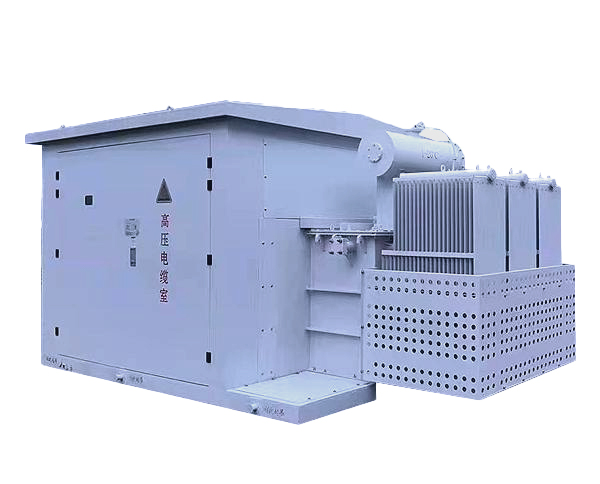
▲ Sino-style compact substation — typical appearance
The Sino-style compact substation is a domestically developed Chinese product that draws on the miniaturization strengths of the American design and the automation capabilities of the European design. The result is a comprehensive set of advantages — safe, reliable, convenient, and environmentally friendly — making it particularly well suited to wind power and solar PV projects.
The high-voltage side uses an air-insulated ring main unit fitted with a vacuum circuit breaker, current transformers, zinc oxide surge arresters, earthing switches, and live-line indicators. The low-voltage side configuration is the same as that of the American and European types. The transformer is typically oil-immersed.
For cooling, the design follows the American approach: cooling fins are installed in an open natural-convection configuration, avoiding the instability associated with forced-air cooling. At the same time, all live parts are completely sealed, ensuring both dust protection and safety. Protection coverage is comprehensive: electrical protection includes instantaneous overcurrent, time-delayed overcurrent, overload, and single-phase earth-fault protection, while non-electrical protection covers transformer Buchholz relay (heavy/light), oil level monitoring, and oil temperature monitoring.
Typical Applications:
▸ Step-up substations for onshore and offshore wind farms
▸ Large-scale ground-mounted and rooftop solar PV power stations
▸ Renewable energy projects with demanding automation and protection requirements
Comparison Overview: Three Types of Compact Substations
Category | American-Style | European-Style | Sino-Style |
Origin | USA | France / Germany | China (domestically developed) |
Structure | Highly integrated, extremely compact | Linear / triangular layout | Combines American & European strengths |
Transformer Type | Oil-immersed | Dry-type | Typically oil-immersed |
Footprint | Smallest | Largest | Medium |
Scalability | Limited | High | Good |
Typical Applications | Street lighting, temp sites, PV & wind | High-rise residential, critical buildings | Wind power & solar PV projects |
Conclusion
American-style, European-style, and Sino-style compact substations each have their own strengths and fulfill different roles in power distribution systems. The American-style offers the smallest footprint and the greatest deployment flexibility, making it ideal for temporary or space-constrained applications. The European-style delivers rich functionality and strong scalability, making it the preferred choice for high-reliability building power distribution. The Sino-style combines the best of both, and performs particularly well in the renewable energy sector. Understanding the structural characteristics and applicable scenarios of all three will help engineers make more rational and cost-effective equipment selection decisions in real-world projects.
Zhejiang Liqiang Intelligent Equipment Co., Ltd. | www.lqele.com.cn

 English
 China
China Русский